 Request a ConsultationRequest a Consultation

Pregnancy, weight change, piercings and past surgery can leave the belly button stretched, protruding or uneven. Umbilicoplasty reshapes it into a neat, natural-looking contour, usually through incisions hidden inside the belly button itself.

A belly button can lose its shape when the surrounding skin stretches, when a small hernia pushes it outward, or when a piercing leaves it torn or elongated. Many patients simply want a smaller, more vertical shape.
Most reshaping is done through incisions placed inside the rim of the belly button, so scars sit out of sight. Excess skin is trimmed, the base is secured to the abdominal wall, and the rim is shaped to a natural contour.
It can be performed on its own under local anesthesia or as part of a tummy tuck. If a small umbilical hernia is present, Dr. Sood can repair it at the same time.
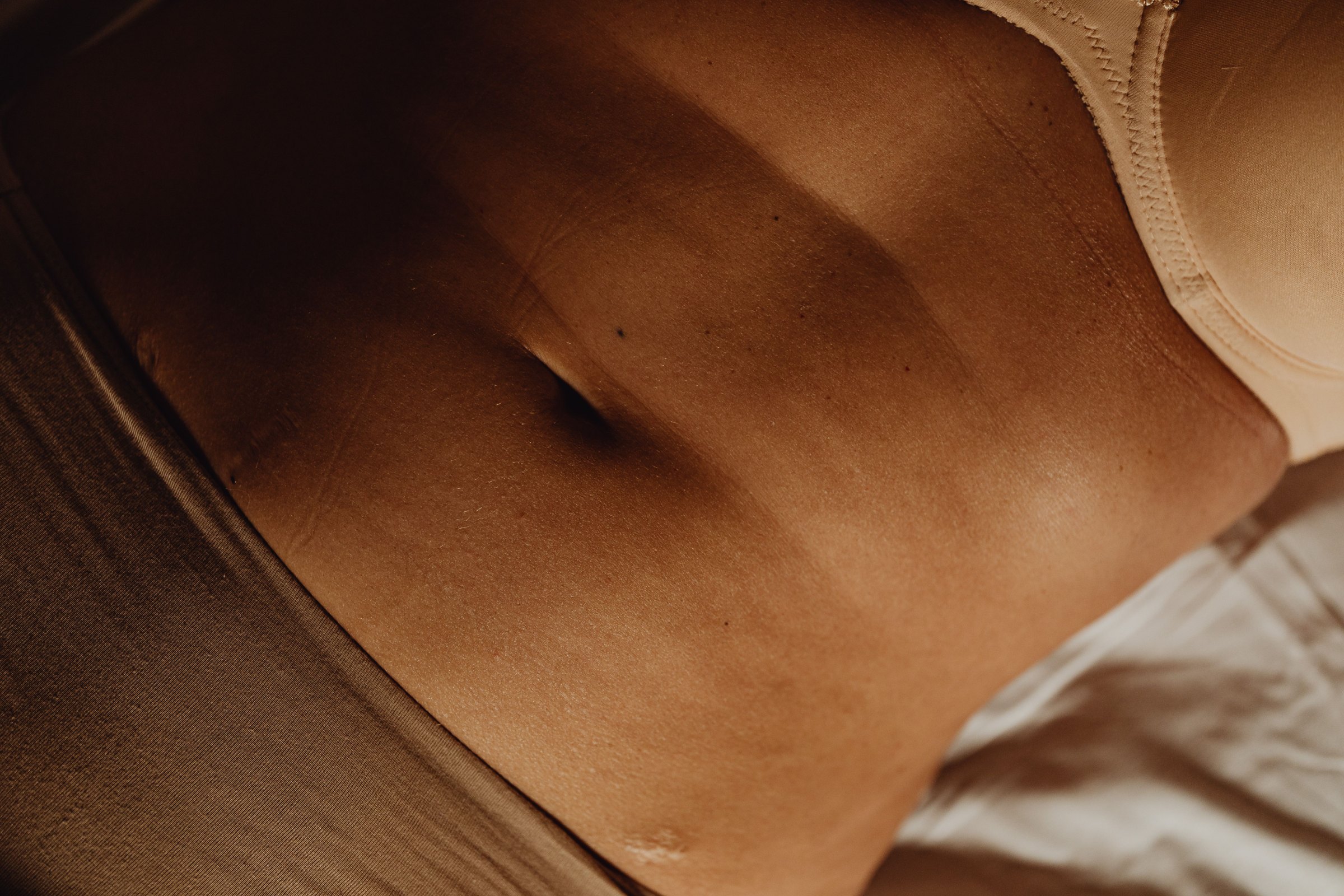
Belly button reshaping suits adults who are unhappy with the shape or size of their belly button. At consultation Dr. Sood explains what can be changed and whether a hernia repair is needed.
If your question is not here, bring it to consultation. Nothing is too small to ask.
Ask Dr. SoodDiscomfort is mild and usually managed with over-the-counter medication.
It can be. A full tummy tuck always includes repositioning the belly button, and it can be reshaped at the same time.
Most patients return to work within a few days and to exercise after about two weeks.
Often, yes. If a hernia is causing it, the hernia is repaired and the belly button is set inward.
Incisions are usually placed inside the belly button, so scars are hidden once healed.
Board-certified plastic & reconstructive surgeon
Dr. Aditya Sood is an American Board of Plastic Surgery-certified plastic surgeon with over 12 years of experience specializing in a variety of plastic, reconstructive, and aesthetic procedures. His focus lies in advanced aesthetic surgery of the face, breast and body.
Learn MoreTell us a little about what brought you here. We'll follow up to schedule, in person or virtually.